How to read vintage Oakley tags
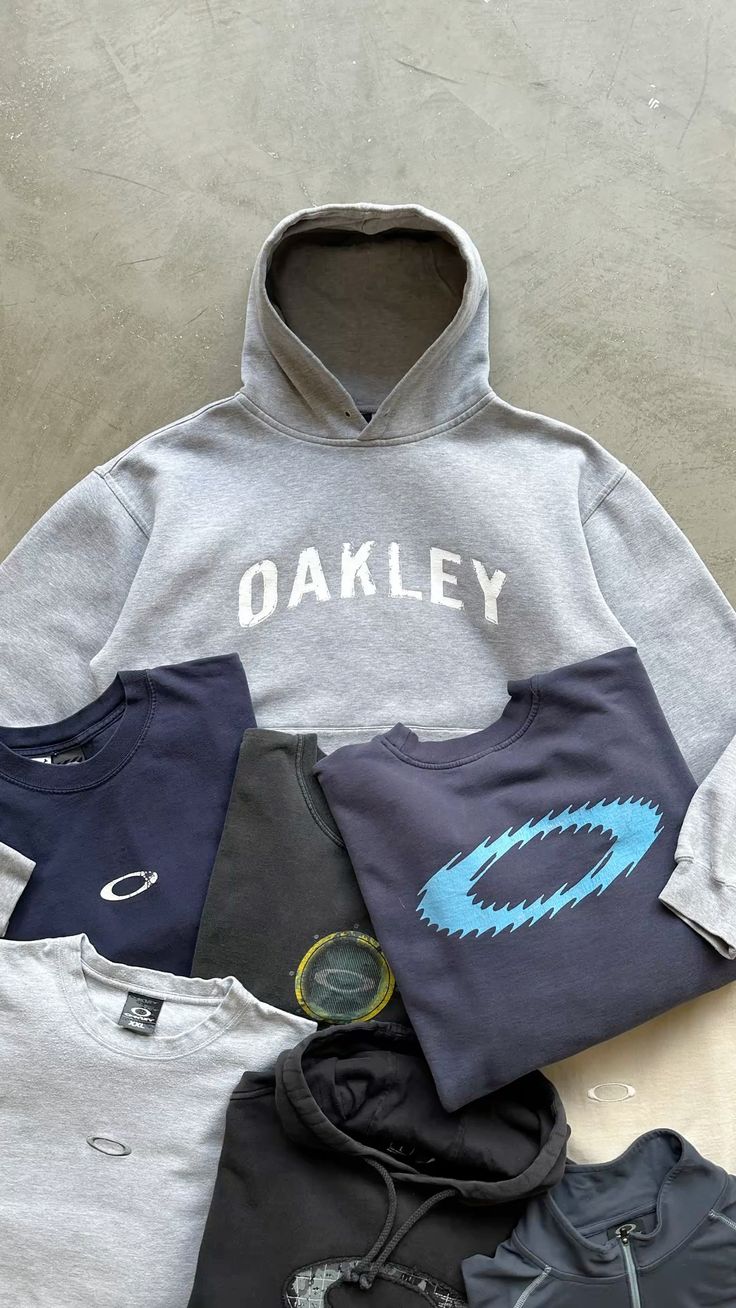
Vintage Oakley apparel has quietly become one of the hottest corners of the resale market. The problem: Oakley ran several different clothing lines over the years, changed manufacturers, and swapped tag designs constantly. Two shirts that look identical on the hanger can be a decade apart once you flip the collar.
The tag is your fastest tell. Below are five real Oakley tags, the exact ones you'll come across sourcing, with what each one signals about era, line, and authenticity. Use them as a visual reference next time you're standing in a thrift aisle deciding whether to pull a piece.
One rule before we start: never authenticate on a single detail. Read the main tag, the care/RN tag, the stitching, and the print together. A great fake copies the logo; it rarely copies everything.
1. The "Software" USA tag
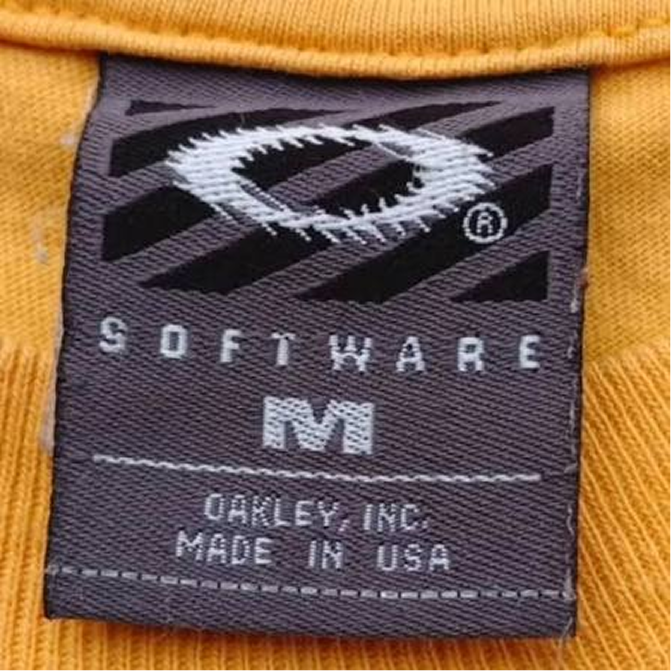
This is the classic Oakley Software apparel tag, Oakley's main clothing line from roughly the late 90s into the mid 2000s. The giveaways: the stitched elliptical "O" (Oakley's ellipse mark) sitting over that diagonal hatched background, the word "SOFTWARE" spelled out in wide-spaced caps, and crucially "OAKLEY, INC. MADE IN USA" at the bottom. Domestic production skews earlier in the line's life, before manufacturing moved offshore. A woven (not printed) tag with a clean registered ® mark is what you want to see.
2. The "Genuine Oakley Software" satin tag
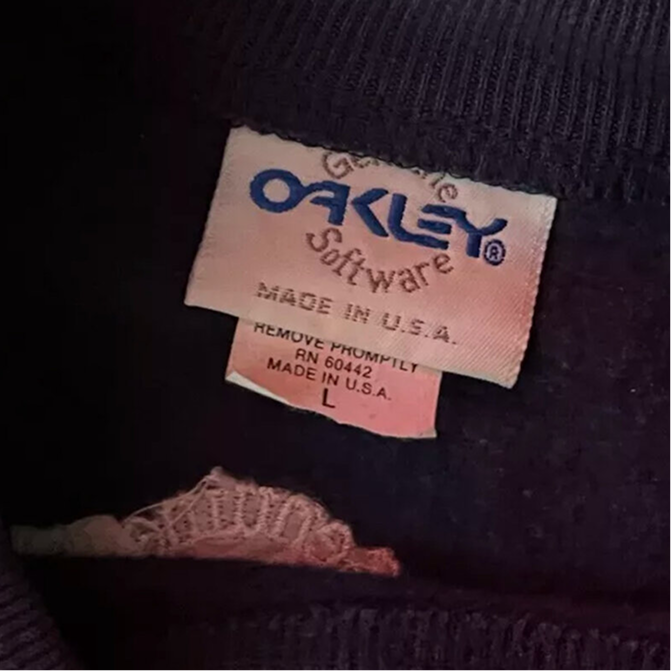
A softer, satin-style label with the flowing "Genuine OAKLEY® Software" script. Note the care tag stitched beneath it: "REMOVE PROMPTLY," and RN 60442. An RN (Registered Identification Number) identifies the company responsible for the garment; you'll see this one on Oakley pieces, though treat any RN as a supporting detail rather than proof on its own, since numbers can be shared or reassigned. The salmon/pink oxidized look is typical of an older tag that has aged; don't mistake fading for a red flag here. Two separate "MADE IN U.S.A." callouts (label and care tag) is a good authenticity signal.
3. The red woven "O" tag (Canadian care label)
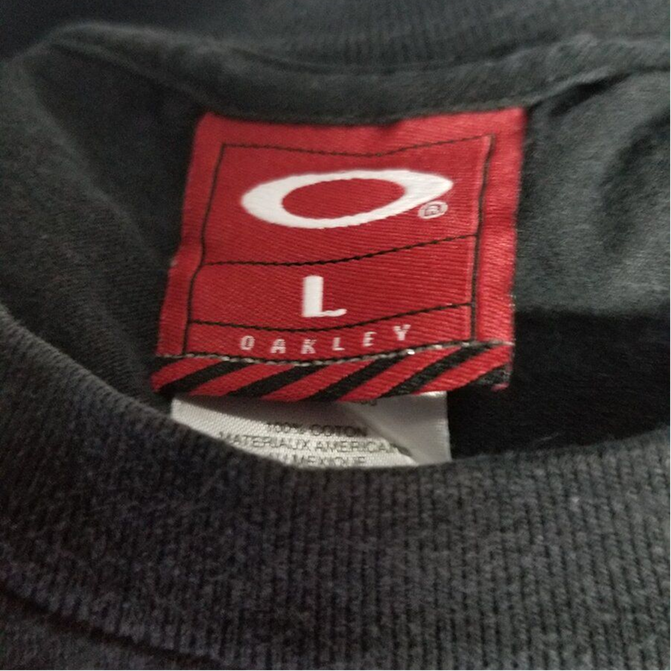
Same ellipse "O" branding, executed as a bold red woven tag with the hatched stripe detail along the bottom edge and "OAKLEY" spelled beneath the logo. The tell on this one is the care label tucked underneath: the bilingual French/English wording ("COTON," "MATÉRIAUX AMÉRICAIN") means it was made for the Canadian market. Region-specific care labels are normal and not a knock on authenticity, but they're worth noting when you list, since collectors like the detail.
4. The distressed black "O" tag
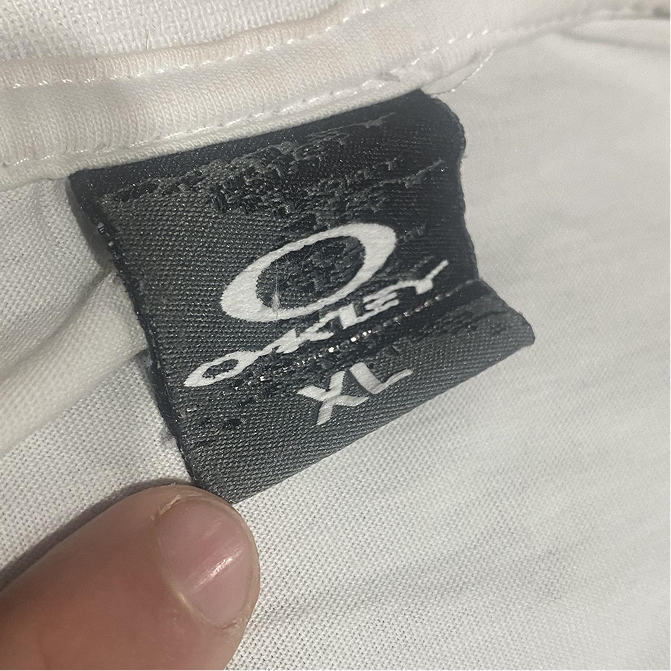
A black tag with the ellipse and "OAKLEY" rendered in a metallic silver foil-style finish. This treatment is common on later Software-era and blank apparel. The metallic print naturally cracks and fades with washing, so heavy distressing here is expected and not automatically a fake. Check that the ellipse shape is correct (the negative-space "O" is a clean, even ring) and that the script matches Oakley's letterforms rather than a slightly-off knockoff font.
5. The embroidered black tag
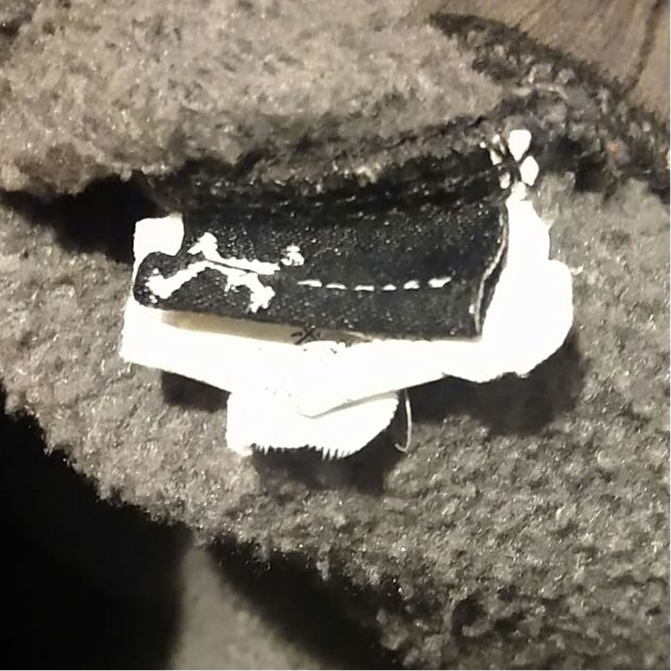
This one's included for a reason: it's exactly the kind of tag people misidentify. Photographed at an angle in poor light, the white embroidery is hard to read and easy to write off. Before you pass on a piece like this, flatten the tag and shoot it straight-on under good light. Embroidered (rather than printed) branding is generally a positive sign; it costs more to produce and fakes often skip it. When a tag is ambiguous, the surrounding details do the talking: seam construction, the RN number, and the quality of the garment print.
Quick dating cheat sheet
"Made in USA" + woven Software tag → generally earlier (late 90s to mid 2000s). Overseas care labels + metallic/printed tags → generally later. RN 60442 → the RN seen on these pieces, useful as a supporting detail but not proof on its own. And remember: the ellipse "O" mark should always be crisp and symmetrical. Sloppy logo geometry is the single most common fake tell.
When you pull a piece like this, log the tag details the moment you buy it: era, line, RN, and what you paid. Six months later when a buyer asks "is this authentic and how old is it?", you'll have the answer ready, and your sourcing history will start showing you which Oakley eras actually sell. That's the kind of record Hauly is built to keep.